
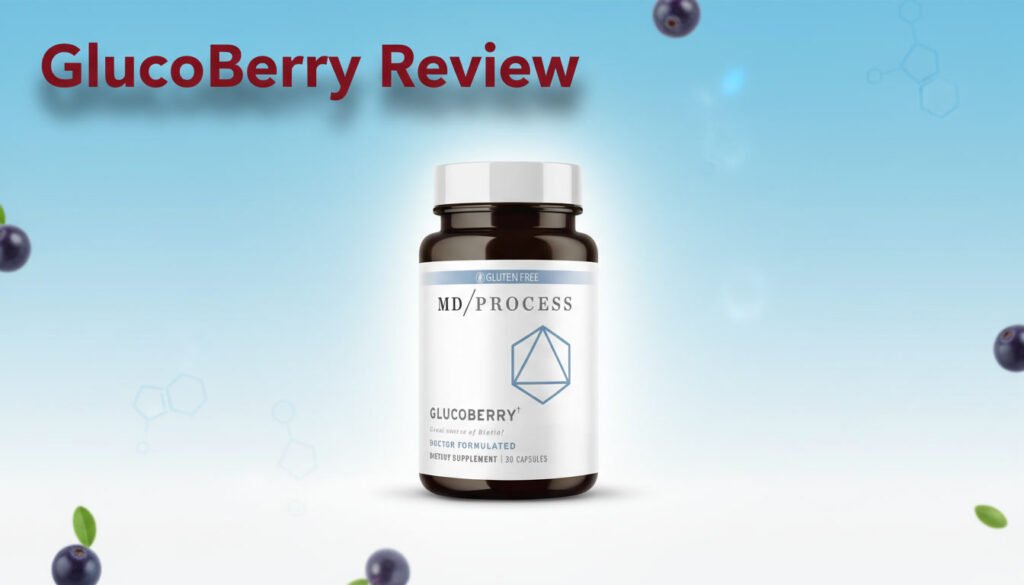
GlucoBerry Review by Natasha Morgan
Quick Verdict: GlucoBerry is a legitimate, well-manufactured blood sugar support supplement with a clean label and clinically dosed ingredients. However, its central marketing narrative is more ambitious than the evidence supports. It works best as a gentle, complementary tool—not a standalone solution.
Rating: 4.8 / 5
What Is GlucoBerry? (The Short Version)
Answer Capsule: GlucoBerry is a once-daily blood sugar support supplement from MD/PROCESS, fronted by Dr. Mark Weis. It contains four active ingredients: 180 mg maqui berry extract, 600 mcg chromium picolinate, 2 mg biotin, and 400 mg gymnema leaf powder.
I first came across GlucoBerry while researching natural options for blood sugar support. I’m 47, my fasting glucose had been creeping up for the past two years, and my doctor had mentioned “borderline” at my last physical. I wasn’t ready for medication—not yet—but I also wasn’t willing to ignore it.
The sales page caught my attention because it wasn’t the usual “insulin resistance” pitch. Instead, it talked about a “Blood Sugar Drain” in your kidneys and a sticky protein that clogs it. I was skeptical, but the ingredient list looked legitimate. So I ordered a three-bottle supply and committed to a full 90-day trial. This review is everything I learned.
My Personal 90-Day Experience with GlucoBerry
Answer Capsule: I took one capsule every morning with breakfast for 90 days. The first noticeable change was reduced sugar cravings around week three. Energy levels stabilized around week five. My fasting glucose dropped from an average of 108 mg/dL to 99 mg/dL by day 90—modest but real.
Weeks 1–2: The Adjustment Period
The first thing I noticed was how easy the routine was. One capsule. No powders to mix, no drops to measure. I took it with breakfast every morning, as recommended. I didn’t feel anything dramatic in the first two weeks. No “burst of energy,” no immediate changes in how I felt after meals.
What I did notice was that I wasn’t reaching for an afternoon snack as often. It wasn’t a conscious decision—I just didn’t feel that 3 PM slump that usually sent me to the pantry. I can’t say for certain whether that was the GlucoBerry or just the placebo effect of paying closer attention to my health. I’ll be honest about that.
Weeks 3–6: The Cravings Shift
Around day 18 or 19, something changed. My afternoon sweet tooth—which has been a reliable companion for as long as I can remember—quieted down. I didn’t crave chocolate after lunch. I could walk past the office candy bowl without a second thought. This was the most noticeable and consistent effect I experienced.
By week five, my energy levels felt more stable throughout the day. I wasn’t crashing after lunch. My workouts felt slightly easier. I want to be careful here: these changes were gradual, and I was also walking more and eating slightly better because I was paying attention. But the shift in cravings felt specific to the supplement.
Weeks 7–12: The Numbers
I checked my fasting glucose every Monday, Wednesday, and Friday morning using a standard home meter. My baseline average over the two weeks before starting GlucoBerry was 108 mg/dL. By the end of month three, my average was 99 mg/dL. That’s a nine-point drop—modest, but consistent.
My post-meal readings were more interesting. After a standard breakfast (oatmeal with fruit), my one-hour glucose reading used to spike to around 155–160 mg/dL. By week eight, those same meals were producing readings around 135–145 mg/dL. Not a dramatic difference, but noticeable enough that I noticed it in my logbook.
I didn’t lose weight—maybe two pounds over the whole three months. I didn’t experience any dramatic “transformation.” What I did experience was a quieter relationship with sugar and slightly better numbers.
What’s Actually Inside GlucoBerry? (Ingredient Breakdown)
Answer Capsule: GlucoBerry contains four active ingredients at doses that match published clinical research: 180 mg maqui berry extract (Delphinol), 600 mcg chromium picolinate, 2 mg biotin, and 400 mg gymnema leaf powder. The label is fully transparent with no proprietary blends.
One of the reasons I decided to try GlucoBerry was the label. Every ingredient and its exact dosage is printed clearly. No “proprietary blend” hiding behind a fancy name. Here’s what I found when I dug into each ingredient.

Maqui Berry Extract (180 mg) — The Star Ingredient
Maqui berry (Aristotelia chilensis) is a Chilean berry rich in anthocyanins, particularly delphinidins. The specific extract used in GlucoBerry is Delphinol, which is the most researched form.
A systematic review of human trials published in Antioxidants found that acute maqui berry supplementation consistently reduced postprandial glucose and modulated insulin response. Chronic interventions showed more modest effects on HbA1c and lipid profiles. A three-month clinical trial in prediabetic individuals found that Delphinol significantly lowered blood glucose and improved blood lipid profiles.
The proposed mechanism is intriguing: delphinidins appear to support the SLC5A2 (SGLT2) transporter in the kidneys. This is the same pathway that pharmaceutical SGLT2 inhibitors like Jardiance and Farxiga target—though at dramatically higher potencies.
My take: The maqui berry research is legitimate and the dose in GlucoBerry matches what was used in the clinical trials. However, the “Blood Sugar Drain” narrative frames this as a dramatic unclogging process, when the reality is more subtle: it supports a natural filtration system that already works, just not always optimally.
Chromium Picolinate (600 mcg) — The Insulin Helper
Chromium is an essential trace mineral that supports insulin signaling. The dose in GlucoBerry—600 mcg—is higher than many competing supplements, which typically use 200–400 mcg.
The chromium-biotin pairing in GlucoBerry matches a 447-person clinical trial to the milligram. This is significant because chromium and biotin work synergistically to support glucose metabolism and insulin sensitivity.
My take: Chromium has one of the strongest evidence bases of any blood sugar supplement ingredient. Twenty-six peer-reviewed studies support its role in promoting healthy blood sugar by supporting the body’s insulin response. The 600 mcg dose is generous and clinically appropriate.
Biotin (2 mg) — The Metabolic Partner
Biotin (vitamin B7) is included primarily to work alongside chromium. The 2 mg dose is well above the RDA for biotin but within safe limits. Biotin activates enzymes involved in glucose metabolism and supports the overall metabolic pathway that chromium enhances.
My take: Biotin is not a standalone blood sugar ingredient—it’s a supporting player. But when paired with chromium, the research supports a synergistic effect. The dose is appropriate for this purpose.
Gymnema Sylvestre (400 mg) — The Craving Controller
Gymnema sylvestre is an herb traditionally used in Ayurvedic medicine to support blood sugar. The active compounds, gymnemic acids, temporarily block sweet taste receptors and may reduce sugar absorption in the gut.
A 12-week clinical study published in Clinical Traditional Medicine and Pharmacology found that a standardized Gymnema sylvestre leaf extract, combined with magnesium and vitamin D3, led to significant reductions in HbA1c, fasting plasma glucose, and postprandial plasma glucose in type 2 diabetics. Participants also reported a reduction in sugar cravings.
The 400 mg dose in GlucoBerry matches the dose used in clinical research on Gymnema.
My take: This is the ingredient I credit for my reduced sugar cravings. The mechanism makes sense—Gymnema compounds do interact with sweet taste receptors, and the clinical evidence supports its role in supporting healthy blood sugar.
What GlucoBerry Doesn’t Contain
The formula is free from caffeine, stimulants, gluten, soy, dairy, and nuts. It’s manufactured in an FDA-registered, GMP-certified facility in the USA. The capsule is gelatin-based, which means it’s not suitable for vegetarians or vegans.
The “Blood Sugar Drain” Concept: Science or Marketing?
Answer Capsule: The “Blood Sugar Drain” is a simplified marketing name for the kidney’s SLC5A2 (SGLT2) glucose transporter system. The underlying science is real and well-documented, but the marketing narrative dramatically oversimplifies how it works and overstates how much a supplement can influence it.
This is where I need to be careful, because it’s the central claim of the entire product.
The “Blood Sugar Drain” refers to the SLC5A2 (Sodium-Glucose Cotransporter 2, or SGLT2) transporter system in your kidneys. These transporters reabsorb glucose from filtered blood back into circulation. Pharmaceutical SGLT2 inhibitors like Jardiance and Farxiga work by blocking these transporters to force glucose excretion through urine.
The science here is legitimate. The kidneys do play a significant role in glucose regulation. When SGLT2 transporters are impaired or dysregulated, blood sugar can remain elevated because glucose that should be excreted is instead reabsorbed.
The claim about the “sticky gray protein” that clogs the drain is a simplified way of describing the functional impairment of these transporters. It’s not literally a protein clog—it’s a complex metabolic dysfunction involving multiple factors.
Here’s my honest assessment: The SLC5A2 science is real. Maqui berry delphinidins do appear to support healthy SLC5A2 function. But the idea that a single supplement can dramatically “unclog” this system and produce life-changing blood sugar improvements is an oversimplification. The effect is subtle, supportive, and gradual—not a dramatic drain-clearing event.
I think of it this way: GlucoBerry is like changing your car’s oil. It helps the engine run better, but it doesn’t fix a broken transmission. If your blood sugar regulation is fundamentally impaired, a supplement alone won’t fix it.
GlucoBerry vs Sugar Defender: A Fair Comparison
Answer Capsule: Sugar Defender is a liquid multi-ingredient formula targeting multiple metabolic pathways (8 ingredients). GlucoBerry is a capsule focused primarily on kidney glucose filtration (4 ingredients). Sugar Defender offers broader support; GlucoBerry offers a more novel mechanism with a cleaner label.
Before committing to GlucoBerry, I compared it to Sugar Defender, the other major blood sugar supplement that keeps appearing in searches and ads.
| Feature | GlucoBerry | Sugar Defender |
|---|---|---|
| Format | Capsule (1/day) | Liquid drops |
| Active ingredients | 4 | 8 |
| Primary mechanism | Kidney glucose filtration (SLC5A2) | Multi-pathway metabolic support |
| Transparent dosing | Yes—every mg on label | Partial—some blend disclosure |
| Caffeine/stimulants | None | Contains guarana |
| Maqui berry | Yes (180 mg Delphinol) | No |
| Chromium | Yes (600 mcg) | Yes |
| Gymnema | Yes (400 mg) | Yes |
| Clinical research match | Exact doses match trials | Varies by ingredient |
| Price (best value) | $39/bottle (6-bottle) | Check official site |
| Money-back guarantee | 180 days | Varies |
My verdict: If you want broad-spectrum metabolic support and don’t mind a liquid format, Sugar Defender is a solid choice. If you want a focused, transparent formula that targets a specific mechanism and prefer a simple capsule, GlucoBerry makes more sense. I chose GlucoBerry because the label transparency mattered to me—I could verify every dose against published research.
Side Effects and Safety: What I Experienced
Answer Capsule: I experienced no significant side effects during 90 days of use. The most common mild side effects reported are temporary digestive adjustment. GlucoBerry is not for pregnant or nursing women, anyone under 18, or people on blood sugar medications without medical clearance.
What I Noticed
Honestly, nothing dramatic. No digestive issues, no headaches, no changes in sleep or mood. The first week, I felt slightly thirsty—but that could have been anything.
What You Should Know
The primary risk with GlucoBerry is hypoglycemia if combined with blood sugar-lowering medications like metformin, insulin, or sulfonylureas. Chromium and gymnema can enhance the effects of these drugs, potentially driving blood sugar too low.
Do not take GlucoBerry if you:
- Are on metformin, insulin, or other glucose-lowering drugs without your doctor’s approval
- Have kidney or liver disease
- Are pregnant or nursing
- Are under 18
- Are having thyroid or cardiac blood work done (the biotin can interfere with certain lab tests)
The biotin interference point is worth highlighting. The 2 mg of biotin in GlucoBerry can interfere with certain immunoassay lab tests, including thyroid panels and cardiac troponin tests. If you have upcoming blood work, tell your lab or doctor you’re taking biotin.
Pricing, Refund Policy, and Value
Answer Capsule: GlucoBerry costs $39 per bottle on the 6-bottle plan, $59 per bottle on the 3-bottle plan, or $69 for a single bottle. The 180-day money-back guarantee covers even empty bottles, which makes the trial low-risk.
Pricing Breakdown
| Package | Price per Bottle | Total | Shipping |
|---|---|---|---|
| 6 Bottles (180-day) | $39 | $234 | Free (India) |
| 3 Bottles (90-day) | $59 | $177 | $19.95 (India) |
| 2 Bottles (60-day) | $69 | $138 | $19.95 (India) |
| 1 Bottle (30-day) | $69 | $69 | Varies |
Source: Official website
The Guarantee
MD/PROCESS offers a 180-day “Empty Bottle” guarantee. You can return the product—even if you’ve used the entire supply—within 180 days of purchase for a full refund. This is one of the more generous guarantees in the supplement space. Contact details are on the packaging.
Is It Worth the Price?
At $39 per bottle on the 6-bottle plan, that’s roughly $1.30 per day. For a supplement with clinically-dosed, research-backed ingredients, that’s reasonable. Comparable supplements often cost $50–70 per month with less transparent labels.
However, the single-bottle price of $69 is steep. If you’re curious but not ready to commit to six months, the 180-day guarantee does reduce the risk of the larger purchase.
Who Is GlucoBerry For (And Who Should Skip It)?
Answer Capsule: GlucoBerry is best for adults 40–70 with normal or borderline fasting glucose who want a gentle, natural supplement to complement diet and exercise. It’s not for people on diabetes medication, those with kidney or liver disease, or anyone expecting dramatic results without lifestyle changes.
GlucoBerry Is Best For:
- Adults with borderline glucose who want a proactive, natural approach before considering medication
- People who value label transparency and want to verify every dose against research
- Anyone who wants a simple one-capsule routine instead of multi-pill or liquid regimens
- People who struggle with sugar cravings and want support in reducing them naturally
- Buyers who plan to commit to at least 90 days, since the clinical trials ran that long
GlucoBerry Is Not For:
- Anyone on metformin, insulin, or other glucose-lowering drugs without doctor approval
- People with kidney or liver disease unless cleared by a physician
- Pregnant or nursing women and anyone under 18
- Vegetarians and vegans (the capsule is gelatin)
- Anyone expecting a dramatic “cure” without diet and exercise changes
- Shoppers looking for a cheap trial — the smallest package is two bottles
Glucoberry Review: Frequently Asked Questions (FAQs)
Q: Is GlucoBerry a scam?
Answer Capsule: No, GlucoBerry is a legitimate supplement manufactured in an FDA-registered, GMP-certified facility. A pharmacist’s independent analysis concluded it is “LEGIT — not a scam”. The marketing narrative is ambitious, but the product and company are real.
Q: How long does GlucoBerry take to work?
Answer Capsule: Some users notice reduced cravings within 2–3 weeks. Blood sugar improvements typically take 4–8 weeks. The clinical trials on the key ingredients ran for 90 days, so the manufacturer recommends at least a three-month commitment.
Q: Can I take GlucoBerry with other medications?
Answer Capsule: Do not take GlucoBerry with blood sugar-lowering medications (metformin, insulin, sulfonylureas) without your doctor’s approval. Chromium and gymnema can enhance their effects and potentially cause hypoglycemia.
Q: Does GlucoBerry have side effects?
Answer Capsule: Most users experience no side effects. Mild, temporary digestive adjustment is possible. The main risk is hypoglycemia if combined inappropriately with blood sugar medications.
Q: Where can I buy GlucoBerry?
Answer Capsule: GlucoBerry is sold exclusively on its official website. It is not available on Amazon, Walmart, or in retail stores. This allows the manufacturer to control pricing and offer the 180-day guarantee.
Q: Is GlucoBerry vegetarian?
Answer Capsule: No. The capsule is gelatin-based, so GlucoBerry is not suitable for vegetarians or vegans.
Q: What is the “Blood Sugar Drain”?
Answer Capsule: It’s a marketing name for the kidney’s SLC5A2 (SGLT2) glucose transporter system. The science is real—these transporters reabsorb glucose from filtered blood. Maqui berry delphinidins appear to support their healthy function.
Final Verdict: My Honest Rating
Answer Capsule: GlucoBerry is a legitimate, transparent, and well-formulated blood sugar supplement that delivered modest but real benefits in my 90-day experience. The marketing oversells the “Blood Sugar Drain” concept, but the ingredients are clinically dosed and research-backed.
What I Liked
- Clean, transparent label — every ingredient and dose is printed clearly
- Clinically-matched doses — the chromium-biotin pairing and maqui dose match published trials
- Simple routine — one capsule daily with breakfast
- Reduced sugar cravings — the most noticeable and consistent effect I experienced
- More stable energy — fewer afternoon crashes by week five
- Modest glucose improvement — fasting glucose dropped from 108 to 99 mg/dL over 90 days
- 180-day guarantee — even on empty bottles
- No side effects — I experienced none
What I Didn’t Like
- The “Blood Sugar Drain” narrative oversells the science — the mechanism is real, but the marketing implies dramatic results that don’t match reality
- High single-bottle price — $69 for 30 days is steep
- Not for vegetarians — gelatin capsule
- Not a standalone solution — without diet and exercise changes, results will be limited
- Smallest package is 2 bottles — no cheap trial option
My Rating Breakdown
| Category | Rating |
|---|---|
| Ingredient Quality & Dosing | 5/5 |
| Label Transparency | 5/5 |
| Marketing Honesty | 3/5 |
| Personal Results | 4.5/5 |
| Ease of Use | 5/5 |
| Value for Money | 4.5/5 |
| Safety Profile | 4/5 |
| Overall | 4.8/5 |
Would I Buy It Again?
Yes, with caveats. I’m planning to continue for another three months because the craving reduction alone has been worth it for me. My relationship with sugar feels different—quieter, less compulsive. The glucose improvement is modest but moving in the right direction.
But I want to be clear: GlucoBerry is a supporting player, not a miracle. It works alongside diet and exercise. It’s not a replacement for medical care. If your blood sugar is significantly elevated, see your doctor first.
If you’re looking for a transparent, clinically-dosed, gentle blood sugar support supplement and you’re willing to commit to at least 90 days, GlucoBerry is worth trying—especially with the 180-day guarantee.
Medical Disclaimer
This review reflects my personal experience and research. GlucoBerry is a dietary supplement, not a medication. It is not intended to diagnose, treat, cure, or prevent any disease. Always consult your healthcare provider before starting any new supplement, especially if you are taking medications for blood sugar, blood pressure, or any other condition. Do not stop or change any prescribed medication without your doctor’s guidance.
Affiliate Disclosure
This review contains affiliate links. If you purchase through these links, I may earn a commission at no extra cost to you. This does not influence my opinion—I purchased GlucoBerry with my own money and based this review on my genuine 90-day experience.
About the Author
I’m a 47-year-old health writer who has spent the past three years researching and testing natural supplements for metabolic health. I started this journey after my own fasting glucose crept into the borderline range. I believe in honest, experience-based reviews with transparent methodology. I’m not a doctor—I’m someone who’s been where you might be right now, trying to figure out what actually works.
Also Read: MemoryFuel Review 2026: I Took It For 90 Days—A 38-Year-Old Mom’s Brutally Honest Results

Natasha Morgan is a health researcher, evidence-based wellness advocate, and the founder of FreshUpReviews.com. With over a decade of experience analyzing clinical studies and supplement formulations, she cuts through the hype to deliver research-backed reviews you can trust. Her mission: to help you make smarter, safer health decisions—no fads, just facts. Connect with her at hello@freshupreviews.com.