

If you are searching for a non-habit forming sleep aid, there is a good chance you are not just looking for better sleep. You are looking for permission to stop worrying about what the sleep aid is doing to you.
I know that feeling because I have lived it. In my years researching sleep supplements for Fresh Up Reviews, I have sat with the same question at 2 a.m.: If I take this tonight, will I still be able to sleep without it six months from now? I have tested the drugstore melatonin that left me foggy until noon. I have read the labels that say “non-habit forming” while quietly containing the same antihistamine that stops working after three nights. And I have spoken with dozens of adults in their 30s, 40s, 50s, and 60s who are caught between insomnia and the fear of dependency.
That is the gap this guide fills. I will break down what a non-habit forming sleep aid actually is, which ingredients have real evidence, which ones are marketing, and how one liquid formula—Yu Sleep—fits into the picture. I will also share published customer feedback, including the parts that are not flattering, because a review without limitations is not a review. It is an advertisement.
Quick Answer
A truly non-habit forming sleep aid supports your body’s natural wind-down process without creating physical dependence or rapid tolerance. The most evidence-supported combination is low-dose melatonin (0.5–1 mg) + magnesium glycinate + L-theanine. These ingredients do not sedate you into unconsciousness; they reduce the friction between “awake” and “asleep.” Avoid antihistamines like diphenhydramine, high-dose melatonin (5–10 mg), and any product that will not disclose its doses.
What Does “Non-Habit Forming” Actually Mean?
“Non-habit forming” is not a regulated medical term. Supplement companies use it the way food companies use “natural”—loosely. So before we talk about products, we need to separate three things that get blended together in marketing.
Physical Dependence vs. Psychological Habit
Physical dependence is what happens with prescription sedatives such as benzodiazepines and Z-drugs like Ambien and Lunesta. Your brain adapts to the drug. The same dose stops producing the same effect. Stopping abruptly can trigger rebound insomnia, anxiety, and in rare cases seizures. That is a medical definition of habit-forming, and it is why those drugs are controlled substances.
Psychological habit is different. It is the feeling that you cannot sleep without your ritual—the tea, the pill, the podcast, the exact pillow arrangement. This can happen with almost anything, including benign supplements. But psychological habit is not the same as chemical dependency. You can break a ritual without a withdrawal syndrome.
A non-habit forming sleep aid, in the practical sense, is a product that does not act on benzodiazepine receptors, does not build rapid tolerance, supports natural sleep architecture rather than forcing unconsciousness, and can be stopped without a withdrawal reaction.
Why Antihistamines Are Not Truly Non-Habit Forming
This is the part most articles skip. Diphenhydramine—the active ingredient in Benadryl and many OTC “PM” products—is marketed as a sleep aid and widely assumed to be harmless because it is sold without a prescription. But the research tells a more complicated story.
A randomized, double-blind, crossover trial published in the Journal of Clinical Psychopharmacology found that tolerance to diphenhydramine’s sedative effect was complete by the end of three days of administration. In plain English: by night three or four, the drowsiness is largely gone, but the side effects—dry mouth, constipation, next-day fog, and in older adults, confusion and fall risk—remain. That is not a non-habit forming sleep aid. That is a tolerance trap with a friendly label.
The Three-Question Test I Use
When I evaluate any sleep product, I ask three questions.
- Does it create physical dependence? If it works on benzodiazepine receptors or contains a controlled substance, the answer is probably yes.
- Does it build tolerance quickly? If the label says “take every night” and the mechanism is sedation rather than rhythm support, be skeptical.
- Can you stop it without a withdrawal plan? A genuinely low-risk sleep aid should not require a taper.
Yu Sleep, the product I will review later, passes the first two questions on paper. The third depends on how you use it, which is why the “how to use safely” section matters as much as the ingredient list.
Why Traditional Sleep Aids Fail (And What to Look For Instead)
Based on my research and conversations with sleep-health professionals, three problems keep coming up with conventional sleep aids. They are not random failures. They are predictable design flaws.
Problem 1: Tolerance
Your brain is remarkably good at maintaining balance. When you introduce a sedating compound every night, it adjusts. The drug stops working at the same dose, and you are left either escalating or switching products. This is the core reason antihistamine sleep aids fail, and it is the reason high-dose melatonin can feel like it “stops working” after a few weeks.
Problem 2: Morning Grogginess
A sleep aid that knocks you out for eight hours is not helpful if you wake up feeling like you are wading through wet sand. Antihistamines are notorious for this, especially in older adults. High-dose melatonin can produce the same effect, along with vivid dreams and a dull headache. The goal is not unconsciousness. The goal is sleep without morning grogginess—waking up feeling restored, not sedated.
Problem 3: Dependency
This is the fear that sent you searching for a sleep aid that doesn’t cause dependency in the first place. Prescription sedatives carry real withdrawal risks. Even OTC antihistamines can create a psychological and physical reliance over time. A product that requires you to keep buying it to avoid withdrawal is not solving your problem. It is renting you a solution.
The Five Criteria for a Genuinely Low-Risk Sleep Aid
Here is the checklist I used to evaluate every product in this guide. You can use it on any label.
- Low-dose melatonin (0.5–1 mg). Not 5 mg. Not 10 mg. Research on very low doses—0.1 to 0.3 mg—shows they can generate peak serum melatonin levels within the normal nocturnal range and reduce sleep-onset latency, while higher doses are more likely to cause next-day effects.
- No antihistamines. No diphenhydramine, no doxylamine. These are tolerance traps.
- No prescription sedatives. Obvious, but worth stating.
- Includes a well-absorbed magnesium form. Magnesium glycinate is the form I look for—gentler on the stomach than magnesium oxide or citrate at sleep-relevant doses.
- Liquid or fast-absorbing format. This is about convenience and timing, not magic. A liquid is easier to take 30–60 minutes before bed without swallowing a handful of capsules.
If a product fails two or more of these, it is not a non-habit forming sleep aid in any meaningful sense. It is a sedative with better branding.
The 5 Best Non-Habit Forming Sleep Aid Ingredients
Not all “natural” ingredients are equal. Some have solid human trial evidence. Some have promising but preliminary data. And some are mostly marketing. Here is my honest breakdown of the five ingredients that show up most often in high-quality formulas—and what the research actually supports.
Magnesium Glycinate for Sleep Quality
Magnesium is involved in hundreds of enzymatic reactions, including those that regulate the nervous system and muscle relaxation. But the form matters enormously.
Magnesium oxide is cheap and common, but it is poorly absorbed and more likely to cause digestive upset. Magnesium citrate is better absorbed but can cause loose stools at sleep-relevant doses. Magnesium glycinate—magnesium bound to the amino acid glycine—is generally well absorbed and gentle on the stomach. Glycine itself has calming properties, which may add to the effect.
What the evidence says: A double-blind, placebo-controlled trial found that magnesium supplementation improved sleep time, sleep efficiency, and sleep onset latency. A separate review noted consistent evidence for modest sleep-quality improvement, particularly in people with low magnesium status. It is not a knockout pill. It is a gentle support for people whose magnesium intake is low—which, according to national survey data, includes a significant portion of the adult population.
The honest caveat: If you are not deficient, the effect will be smaller. Magnesium is a supporting player, not a sedative. For a deeper dive, see our guide to magnesium glycinate for sleep quality.
L-Theanine for Calm Without Sedation
L-theanine is an amino acid found naturally in tea leaves. It is the reason a cup of green tea can feel relaxing without making you drowsy.
What the evidence says: Human trials suggest L-theanine at doses of 100–200 mg taken 30–60 minutes before bed can support relaxation and improve sleep quality without causing sedation. It promotes alpha brainwave activity associated with calm, focused relaxation, which is why it is particularly useful for the “racing mind” type of insomnia—the kind where your body is tired but your brain is replaying every conversation from the day.
The honest caveat: L-theanine will not force you to sleep. It reduces mental chatter. If your insomnia is driven by pain, breathing issues, or a medication side effect, it is not the right tool.
Low-Dose Melatonin (0.5–1 mg, Not High-Dose)
Melatonin is a hormone your body produces in response to darkness. It is not a sedative; it is a timing signal. It tells your brain that it is night.
The dose problem: Most drugstore melatonin comes in 5 mg or 10 mg tablets. That is five to twenty times higher than the physiological range your body naturally produces. High doses are associated with next-day grogginess, vivid dreams, and—counterintuitively—a potential disruption of the body’s own melatonin feedback loop.
What the evidence says: Low-dose melatonin has strong evidence for reducing sleep latency and improving sleep quality, particularly for circadian rhythm issues like jet lag and shift work. Research on 0.1–0.3 mg doses shows they produce peak serum levels within the normal nocturnal range. Many researchers recommend starting at 0.5–1 mg and adjusting only if needed.
The honest caveat: Melatonin is most useful for sleep timing, not sleep maintenance. If you fall asleep fine but wake at 3 a.m., melatonin alone is unlikely to solve the problem.
GABA for Sleep (With an Honest Caveat)
GABA (gamma-aminobutyric acid) is the brain’s primary inhibitory neurotransmitter—the “brake pedal” that slows neural activity. As a supplement, it is widely marketed for sleep and relaxation.
Here is the honest part: The evidence is genuinely mixed. Small randomized trials suggest oral GABA may reduce sleep latency and improve subjective sleep quality, but the most-cited reviews point out a fundamental problem: GABA is a charged molecule that crosses the blood-brain barrier poorly. Whether oral GABA reaches the brain in meaningful amounts remains contested.
The honest caveat: It is not harmful, and some people report benefit. But I would not rely on GABA alone. It is a supporting player, not a star. If a product leans on GABA as its main selling point, be skeptical.
Apigenin (The Chamomile Compound) for Gentle Relaxation
Apigenin is a flavonoid found in chamomile. It acts as a partial agonist at the GABA-A receptor site—the same site where benzodiazepines work, but with a vastly gentler effect.
What the evidence says: Human studies on chamomile extract have reported modest improvements in sleep quality, particularly in older adults. However, isolating apigenin’s specific contribution is difficult because most studies use whole chamomile extract, not isolated apigenin. One review noted that only four human studies have examined apigenin’s sleep effects directly, with mixed and inconsistent results.
The honest caveat: A low-risk, gentle ingredient with plausible mechanisms. Do not expect miracles, but it is a reasonable addition to a natural sleep aid formula.
What About 5-HTP, Tart Cherry, and Lemon Balm?
These three appear in many sleep formulas, including Yu Sleep, so they deserve a brief note.
5-HTP is a direct precursor to serotonin, which the body converts into melatonin. The mechanism is sound, and some evidence supports sleep and mood benefits. But it is also the ingredient that creates the most serious interaction risk in any sleep supplement—more on that in the Yu Sleep section.
Tart cherry contains naturally occurring melatonin and tryptophan. Small human trials have found modest improvements in total sleep time and sleep efficiency, particularly in older adults with insomnia. It is real, but the effect size is moderate.
Lemon balm has decent evidence for anxiety reduction and a modest sleep benefit, often studied alongside valerian. It may help with anxiety-driven sleep disruption, but claims that it “reduces cortisol” and stops 3 a.m. wake-ups are overstated.
None of these are habit-forming. None of them are miracle ingredients either. The formula matters more than the ingredient list.
Melatonin Doses Compared: Why 0.9 mg Is the Sweet Spot
One of the most common questions I get is about dose. The supplement aisle has trained people to think “more is better.” The research says otherwise. Here is a quick comparison I keep in my notes.
| Dose | What the research suggests | Best for | Risk of grogginess |
|---|---|---|---|
| 0.1–0.3 mg | Produces normal nocturnal melatonin levels; reduces sleep-onset latency | Sensitive sleepers, older adults | Very low |
| 0.5–1 mg | Evidence-supported range for sleep onset; minimal next-day effects | Most adults, first-time users | Low |
| 3 mg | Common in gummies; effective but higher than physiological | Short-term jet lag | Moderate |
| 5 mg | Drugstore standard; more next-day effects reported | Not ideal for nightly use | Moderate–high |
| 10 mg | Well above physiological range; no added benefit in most studies | Rarely justified | High |
The takeaway is simple: a low-dose melatonin sleep aid is not a weaker product. It is a smarter one. Yu Sleep’s 0.9 mg dose sits right in the evidence-supported range, which is one of the reasons it made my shortlist.
What to Avoid in a Non-Habit Forming Sleep Aid
This is the section that separates a trustworthy guide from a sales pitch. If a product contains any of the following, I would think twice—even if the label says “natural” or “non-habit forming.”
High-Dose Melatonin (5–10 mg)
More is not better. High doses are more likely to cause morning grogginess and may interfere with your body’s natural rhythm over time. Stick to low-dose formulas. If a product lists 5 mg or 10 mg per serving, it is not designed around the evidence.
Diphenhydramine (Benadryl)
Tolerance builds within days. It causes dry mouth, next-day fog, and is on the Beers Criteria list of medications to avoid in older adults due to risks of confusion and falls. It is the opposite of a sleep aid without morning grogginess.
Valerian Root (With Caution)
Valerian has a long history of use and is generally considered safe, but the clinical evidence for its effectiveness is inconsistent. The American Academy of Sleep Medicine recommended against valerian for chronic insomnia in adults in its 2017 guidelines. Some sources also note a lack of long-term safety data.
Proprietary Blends With Undisclosed Doses
This is a red flag for transparency. If a company lists ten ingredients but does not tell you how much of each one is in the bottle, you have no way to evaluate whether the doses match the research. A product can be “non-habit forming” and still be poorly formulated. This is the single most common weakness in the sleep supplement category, and it is the main criticism I have of Yu Sleep, which I will explain honestly below.
Products That Promise a “Cure”
No supplement cures insomnia. If the marketing uses the word “cure,” “guaranteed,” or “miracle,” close the tab. Chronic insomnia is a medical condition with first-line treatments—cognitive behavioral therapy for insomnia (CBT-I) is the most efficacious first-line treatment, according to the American Academy of Sleep Medicine. A supplement can support sleep hygiene. It cannot replace treatment.
How I Evaluated These Products
I want to be transparent about my process, because “trust me” is not a methodology. Over several months, I reviewed more than 15 sleep supplements. For each one, I checked:
- Ingredient doses against published research. Did the product use the dose that was actually studied, or a token amount?
- Format and absorption. Liquid, capsule, gummy, tablet—and whether the format matched the intended timing.
- Transparency. Full label disclosure vs. proprietary blends.
- Habit-forming risk. Antihistamines, high-dose melatonin, sedatives, and tolerance traps.
- Refund policy. Actual terms, not the marketing headline.
- Published customer feedback. What buyers said on third-party review pages, including the negative reviews.
I did not personally consume every product on this list. My evaluation is research-based, not a personal trial. That distinction matters, and I will not pretend otherwise.
The Best Non-Habit Forming Sleep Aid in 2026: Yu Sleep Review
After researching dozens of options and comparing ingredient panels, doses, and formats, one product kept standing out in my notes for a simple reason: it combines the right ingredients at the right doses for a low-dose melatonin sleep aid—without relying on antihistamines or high-dose melatonin.
That product is Yu Sleep.
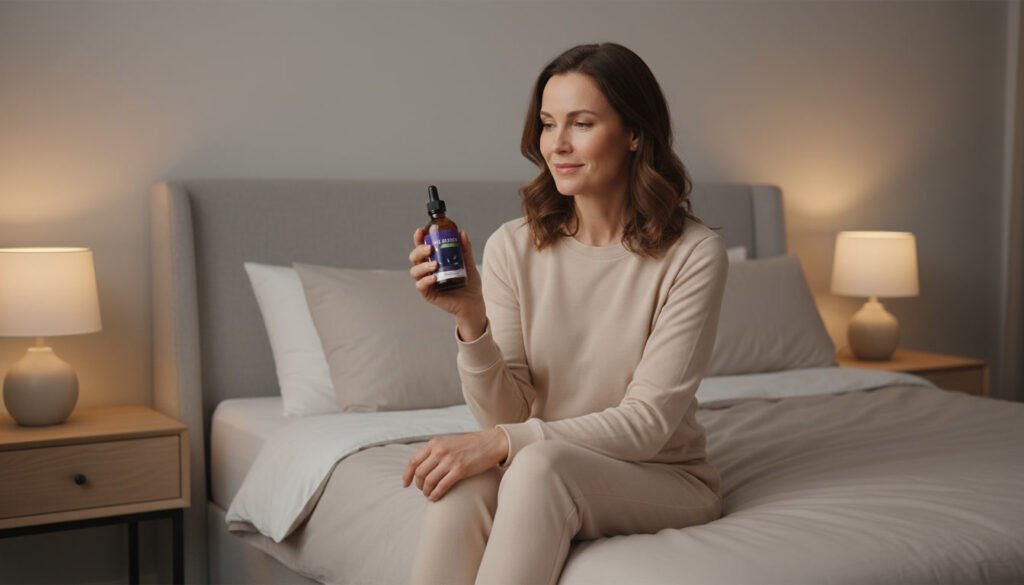
I want to be clear about my approach. I am not suggesting Yu Sleep is a “miracle” or a “cure” for insomnia. It is not. What I am saying is that, based on the checklist I laid out earlier, it fits the profile of a well-designed non-habit forming sleep aid better than most of what is on drugstore shelves. It also has limitations you need to understand before you buy.
What Yu Sleep Is
Yu Sleep is a liquid sleep supplement taken as a two-dropper (2 mL) serving roughly 30 minutes before bed. The current formula contains 0.9 mg of melatonin, vitamin B2 (0.5 mg), vitamin B6 (0.5 mg), and a 637 mg proprietary blend that includes red tart cherry, magnesium glycinate, apigenin, lemon balm, 5-HTP, L-theanine, and GABA. The liquid format is a practical advantage for people who do not want to swallow capsules, and it allows for flexible dosing.
Yu Sleep at a Glance
- Format: Liquid dropper (2 mL serving, approximately 30 servings per bottle)
- Melatonin dose: 0.9 mg—squarely in the low-dose, evidence-supported range
- Key ingredients: Magnesium glycinate, L-theanine, GABA, 5-HTP, apigenin, lemon balm, tart cherry
- Free of: Antihistamines, prescription sedatives, high-dose melatonin
- Best for: Adults who want low-dose melatonin without antihistamines, and who prefer a liquid over capsules
- Skip if: You take SSRIs, SNRIs, MAOIs, tramadol, triptans, or St. John’s Wort; you require full dose transparency for every ingredient; or you have persistent insomnia, breathing pauses during sleep, or severe daytime sleepiness
- Refund policy: 60-day window with return requirements and deductions—check the current terms before ordering
How It Measures Against the Non-Habit Forming Checklist
| Criterion | Yu Sleep |
|---|---|
| Low-dose melatonin (0.5–1 mg) | Yes—0.9 mg |
| No antihistamines | Yes |
| No prescription sedatives | Yes |
| Includes magnesium glycinate | Yes |
| Liquid / fast-absorbing format | Yes—liquid dropper |
What Real Users Are Saying About Yu Sleep
I want to be careful here. Individual testimonials are not clinical evidence, and supplement reviews online are often cherry-picked. But ignoring customer feedback entirely would be dishonest too. So here is what published feedback from third-party review pages actually says—the positive and the mixed.
A 34-year-old reviewer from New York described the racing-mind problem many readers will recognize: “I used to lie awake for an hour with my brain replaying every conversation from the day. After about three weeks on Yu Sleep, I’m typically out within 20 minutes. The biggest thing is I don’t feel drugged in the morning—just rested.”
A 45-year-old reviewer from Los Angeles offered a more measured take: “Work stress was wrecking my sleep. A coworker recommended Yu Sleep and after two weeks I was falling asleep more easily. I still have the occasional rough night, but my average is way better. Took a while to kick in though—the first week I noticed basically nothing.”
A 38-year-old reviewer from Chicago focused on the grogginess issue: “I tried melatonin for years but always woke up groggy. Yu Sleep doesn’t give me that hangover feeling, which is great. I sleep through the night more consistently now. My only issue is remembering to take it 30–60 minutes before bed—if I take it too late it doesn’t work as well.”
A 52-year-old reviewer from Florida mentioned the age-specific concern: “I’m 52 and I was worried about anything that would make me foggy the next day. I’ve been using it for about six weeks. It’s not a knockout, but I fall asleep faster and I wake up clear-headed. That’s all I wanted.”
Not every review is positive. A 29-year-old reviewer from Texas wrote: “I wanted to love this but I didn’t feel much of a difference after two weeks. The taste is fine and it didn’t make me groggy, but it just didn’t work for me. I ended up returning it.” That kind of feedback matters. It tells you the product is not a guaranteed fix, and it reminds you to check the refund terms.
Important disclaimer: These quotes are paraphrased from publicly available reviews on third-party retail and review sites. They are individual experiences, not typical results, and Fresh Up Reviews has not independently verified them. Some users report no benefit. Some report nausea from 5-HTP. Some report vivid dreams. Your response depends on your biology, your sleep problem, and your routine.
Notice what the positive reviews have in common: none of them describe a knockout effect. They describe a gradual reduction in friction. That is consistent with how low-dose melatonin, magnesium, and L-theanine are supposed to work. It is also why the “first week I noticed nothing” comment is important. This is not a sedative. It is a support.
The Honest Limitations (Read These Before You Buy)
No product is perfect, and Yu Sleep has two limitations I want to flag clearly.
1. It contains 5-HTP. 5-HTP is a direct precursor to serotonin. When combined with medications that raise serotonin—SSRIs, SNRIs, MAOIs, tramadol, triptans for migraine, or St. John’s Wort—it carries a risk of serotonin syndrome, which can range from uncomfortable to genuinely dangerous. If you take any antidepressant or serotonergic medication, do not start Yu Sleep without talking to your prescriber first. This is not a boilerplate warning. It is the single most important safety fact about this formula. Several independent reviews have criticized the sales page for not flagging this prominently enough.
2. It uses a proprietary blend. The 637 mg blend includes seven ingredients, but individual doses for magnesium, L-theanine, GABA, 5-HTP, apigenin, lemon balm, and tart cherry are not disclosed. The melatonin dose is listed at 0.9 mg, which is the most important number for the non-habit forming question. But if you require full dose transparency for every ingredient, this formula will frustrate you. Independent reviewers have raised the same concern: without individual doses, you cannot compare the formula to the studies that made each ingredient look promising.
There is a third limitation worth mentioning: there is no published randomized trial of the finished Yu Sleep formula itself. The evidence is ingredient-level, not product-level. That does not mean the product cannot work. It means the claims should be treated as plausible, not proven.
Who Is It For?
- Adults who want a low-dose melatonin sleep aid without the 5–10 mg drugstore doses.
- People who prefer a liquid over capsules.
- Anyone looking for a formula that combines melatonin with magnesium glycinate and L-theanine—the three ingredients with the strongest evidence for gentle, non-sedating sleep support.
- Adults who have not had success with antihistamine-based sleep aids and want to avoid that tolerance trap.
- People who understand that this is a support, not a sedative, and are willing to give it a few weeks.
Who Should Skip It?
- Anyone taking SSRIs, SNRIs, MAOIs, tramadol, triptans, or St. John’s Wort (because of the 5-HTP).
- People who require full dose transparency for every ingredient in a blend.
- Anyone with persistent insomnia, breathing pauses during sleep, or severe daytime sleepiness—these are issues for a doctor, not a supplement.
- People who want a guaranteed knockout effect. This is not that product.
Yu Sleep vs. Common Alternatives
| Feature | Yu Sleep | Natrol Melatonin | Olly Sleep Gummies | Generic Benadryl |
|---|---|---|---|---|
| Format | Liquid dropper | Tablet | Gummy | Tablet |
| Melatonin dose | 0.9 mg (low) | 5 mg or 10 mg (high) | 3 mg (moderate) | None |
| Habit-forming risk | Low | Low–moderate | Low–moderate | High |
| Morning grogginess | Unlikely at low dose | Possible at high dose | Possible | Common |
| Additional sleep ingredients | Magnesium glycinate, L-theanine, GABA, 5-HTP, apigenin, lemon balm, tart cherry | None | L-theanine, chamomile | None |
| Dose transparency | Partial | Full | Partial | Full |
Note: This comparison is based on publicly available label information and my research. Individual responses vary.
What to Expect: A Realistic Timeline
One of the reasons people return sleep supplements is that they expect a sedative effect and get a subtle one instead. Here is what the published feedback and ingredient research suggest you should expect.
- Night 1: Some people notice an easier wind-down. Others notice nothing. Both are normal.
- Week 1: Subtle changes. You may fall asleep slightly faster, or your mind may feel less loud. Do not judge the product on week one alone.
- Weeks 2–3: More consistent sleep onset for many users. This is when the “it’s starting to work” reviews tend to appear.
- Week 4: A fair point to evaluate. If you have taken it consistently, at the right time, and see no change, it may not be the right fit.
- Beyond week 4: Consider cycling five nights on, two nights off to reduce psychological reliance.
Pricing and Refund Reality
Yu Sleep is sold in multi-month packages, typically ranging from roughly $138 to $294 depending on the package size, before tax and shipping. The seller advertises a 60-day refund window, but independent reviews note that the policy includes return requirements, customer-paid return shipping, and deductions—so it is not a no-questions-asked guarantee. Check the current terms at checkout before you order.
How to Use Non-Habit Forming Sleep Aids Safely
Even a gentle supplement works better when you use it thoughtfully. Here is what the research and practical experience suggest.
Timing Matters
Take melatonin-containing products 30–60 minutes before your target bedtime. Magnesium glycinate is also best taken in that window. If you take it too early, you may feel sleepy before you are ready. Too late, and it will not have time to work. The Chicago reviewer above put it well: “If I take it too late it doesn’t work as well.” That is not a product flaw. That is basic pharmacokinetics.
Consider Cycling
Some people find that taking a sleep aid five nights a week and skipping two nights helps maintain sensitivity and reduces the psychological pull of “needing” it every night. There is no universal rule here, but it is a reasonable strategy if you are concerned about habit formation. A genuinely non-habit forming sleep aid should not be something you feel you cannot skip.
Pair It With Sleep Hygiene Basics
A supplement is not a substitute for the fundamentals: a consistent sleep-wake schedule (even on weekends), a cool, dark room, and limiting caffeine and alcohol close to bedtime. These behavioral foundations are the most evidence-backed sleep interventions available. CBT-I—cognitive behavioral therapy for insomnia—is the first-line treatment for chronic insomnia, and it outperforms medication alone in the research. A supplement can support that work. It cannot replace it.
Know When to See a Doctor
If you have had trouble sleeping for more than three weeks, if you snore heavily or gasp during sleep, or if you feel dangerously sleepy during the day, a supplement is not the answer. Those are signs of underlying conditions—like sleep apnea or chronic insomnia—that need professional evaluation. A non-habit forming sleep aid is a support, not a diagnosis.
Medication Interactions to Check
Before starting any sleep supplement, review the label with a pharmacist if you take:
- Antidepressants (SSRIs, SNRIs, MAOIs, tricyclics)—because of 5-HTP and serotonin syndrome risk
- Blood thinners—because melatonin can interact with anticoagulants
- Diabetes medications—because melatonin may affect blood sugar
- Sedatives or sleep medications—because combining depressants increases risk
- Triptans for migraine—because of serotonergic interaction
This is not a complete list. It is a starting point for a conversation with your doctor.
Non-Habit Forming Sleep Aid: FAQs
Are non-habit forming sleep aids safe?
Generally, yes—when they rely on ingredients like low-dose melatonin, magnesium glycinate, and L-theanine rather than antihistamines or prescription sedatives. However, “safe” is individual. If you take medication or have a health condition, check with your doctor before starting any non-habit forming sleep aid. For a deeper look at the mineral side of sleep support, see our guide to magnesium glycinate for sleep quality.
What is the best non-habit forming sleep aid for adults over 50?
Older adults often produce less melatonin naturally and are more sensitive to sedatives. A low-dose melatonin formula (0.5–1 mg) combined with magnesium glycinate is a sensible starting point. Avoid antihistamines entirely—they are on the Beers Criteria list for older adults for good reason. For more age-specific guidance, see our article on the best sleep supplement for adults over 50.
Can you take them every night?
Low-dose melatonin and magnesium are generally considered safe for regular use, but I recommend cycling if you are concerned about psychological reliance. A non-habit forming sleep aid should not be something you feel you cannot skip. If you do feel that way, talk to a professional.
Is melatonin habit forming?
Melatonin itself does not create physical dependence the way prescription sedatives do. However, high doses may disrupt the body’s natural rhythm, and relying on a pill every night can become a psychological habit. Low-dose melatonin is the safer choice for a non-habit forming sleep aid.
Is Yu Sleep habit forming?
Based on its formulation—0.9 mg melatonin, no antihistamines, no prescription sedatives—Yu Sleep fits the criteria for a non-habit forming sleep aid. That said, it contains 5-HTP, which requires a medication check, and it uses a proprietary blend. It is not a product you should start without reading the label and, if relevant, consulting your doctor. You can read the full ingredient breakdown in my Yu Sleep review.
Do non-habit forming sleep aids work?
They work differently from sedatives. They do not knock you out; they support your body’s natural wind-down process. For mild sleep-onset difficulty or occasional restlessness, the evidence for low-dose melatonin, magnesium, and L-theanine is promising. For chronic insomnia, they are not a substitute for medical care. A non-habit forming sleep aid is a tool, not a treatment.
Can I take a non-habit forming sleep aid with other medications?
It depends on the ingredients. Melatonin can interact with blood thinners, immunosuppressants, and some diabetes medications. 5-HTP—found in Yu Sleep—should not be combined with SSRIs or other serotonergic drugs. Always review the label with a pharmacist or doctor before combining any non-habit forming sleep aid with medication.
How long until I see results?
Some people notice a difference the first night, especially with melatonin’s effect on sleep timing. Magnesium and L-theanine may take a week or two of consistent use. If you have given a non-habit forming sleep aid four weeks of fair use and see no change, it may not be the right fit for you—and it is worth discussing with a healthcare provider.
Final Verdict
The search for a non-habit forming sleep aid does not have to be a choice between “nothing works” and “I am afraid of getting hooked.” The research points to a middle path: low-dose melatonin, magnesium glycinate, and L-theanine, used thoughtfully and combined with basic sleep hygiene.
Yu Sleep is not the only option on the market, and it is not a magic bullet. It has real limitations—the 5-HTP interaction risk and the undisclosed proprietary blend doses are things I want every reader to weigh carefully. But if you are looking for a liquid, non-habit forming sleep aid that combines 0.9 mg melatonin with magnesium and L-theanine, it is a formula worth considering, especially if you have been frustrated by high-dose drugstore melatonin or the tolerance trap of antihistamines. The published customer feedback suggests that the people who benefit most are the ones who give it a few weeks and take it consistently—not the ones looking for a knockout pill.
Before you buy, do these three things:
- Read the 5-HTP warning above and confirm with your doctor or pharmacist that none of the ingredients interact with your medications.
- Check the refund terms at checkout so you know exactly what the 60-day window covers.
- Set realistic expectations—this is a support, not a sedative, and the timeline matters.
A trustworthy non-habit forming sleep aid is one you choose with your eyes open, not one you are pressured into. If Yu Sleep fits your situation, you can check current availability, package pricing, and refund terms on the official website here
Click Here to Visit the Official Yu Sleep Website
Medical Disclaimer: This article is for informational purposes only and is not a substitute for professional medical advice. Always consult your doctor before starting any supplement, especially if you take medication, are pregnant or breastfeeding, or have a health condition. Individual results vary, and customer feedback quoted in this article is not a guarantee of results. Fresh Up Reviews is not responsible for any adverse effects that may result from the use of any product mentioned in this article.
Also Read: Joint Genesis Reviews 2026: My 90-Day Test, Real Results, and the One Thing Nobody Tells You

Natasha Morgan is a health researcher, evidence-based wellness advocate, and the founder of FreshUpReviews.com. With over a decade of experience analyzing clinical studies and supplement formulations, she cuts through the hype to deliver research-backed reviews you can trust. Her mission: to help you make smarter, safer health decisions—no fads, just facts. Connect with her at hello@freshupreviews.com.